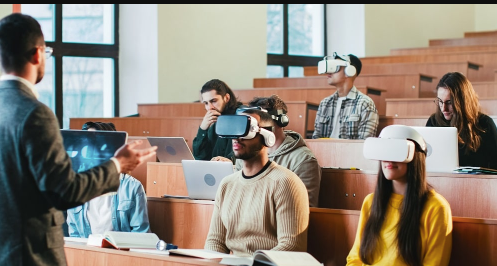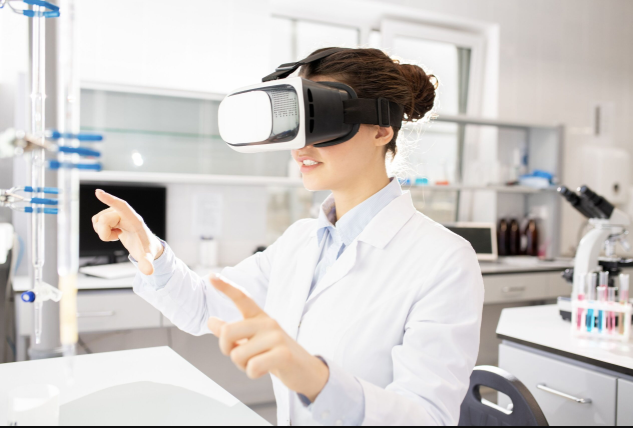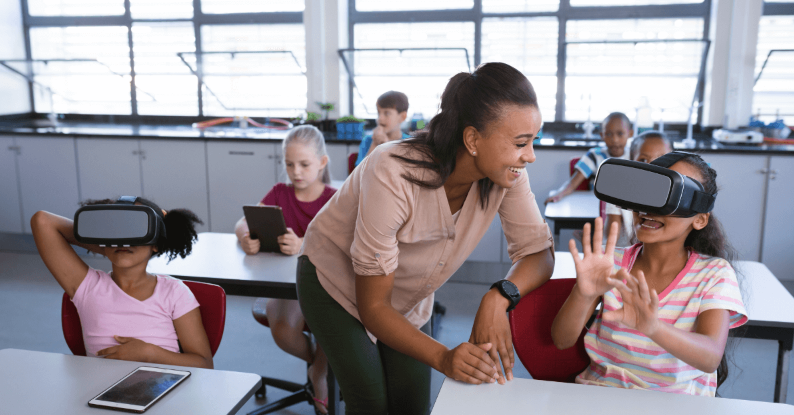

VR technology is transforming education by providing immersive learning experiences that engage students in unprecedented ways. This innovative approach allows learners to explore complex subjects through interactive simulations and virtual field trips. However, the journey to widespread adoption is fraught with challenges, including cost and technical limitations. As educators grapple with these hurdles, the potential for VR to redefine traditional teaching methods raises important questions about its future role in shaping educational landscapes.
How VR Technology Enhances Immersive Learning Experiences
As educators seek novel methods to engage students, virtual reality (VR) technology emerges as a transformative tool that enhances immersive learning experiences.
By facilitating virtual fieldtrips, VR allows learners to explore distant locations without leaving the classroom.
Additionally, interactive simulations provide hands-on opportunities for students to experiment and problem-solve in dynamic environments, fostering curiosity and deepening understanding through experiential learning.
Key Benefits of Integrating VR in Education
The integration of virtual reality (VR) in education presents a multitude of key benefits that reshape traditional teaching methodologies.
VR significantly enhances student engagement by providing immersive, interactive environments that foster curiosity and exploration.
Moreover, it facilitates skill development through practical simulations, enabling learners to practice real-world applications safely.
This innovative approach empowers students, promoting a deeper understanding and mastery of complex concepts.
See also: VR in Healthcare and Therapy
Challenges and Limitations of VR in Classroom Settings
While the benefits of integrating virtual reality (VR) in education are widely acknowledged, several challenges and limitations persist that can hinder its effectiveness in classroom settings.
Cost barriers often restrict access to quality VR hardware and software, while technical issues, such as compatibility and maintenance, can disrupt learning experiences.
These obstacles necessitate careful consideration to fully harness VR’s potential in educational environments.
Future Trends: The Evolution of VR in Education
Although many educational institutions continue to grapple with the integration of virtual reality (VR) technology, emerging trends suggest a transformative future for its application in classrooms.
With the rise of virtual field trips and interactive simulations, students can experience immersive learning environments that transcend traditional boundaries.
This evolution promises to enhance engagement, foster creativity, and equip learners with the tools to navigate an increasingly complex world.
Conclusion
In conclusion, VR technology holds transformative potential for education, offering immersive learning experiences that engage diverse learners. While concerns about cost and accessibility persist, ongoing advancements are likely to reduce barriers, making VR more widely available. By fostering collaboration and curiosity, VR can enhance traditional teaching methods and better prepare students for a technology-driven future. Embracing these innovations may ultimately render educational inequities less pronounced, ensuring that all learners benefit from the evolving landscape of digital learning.